
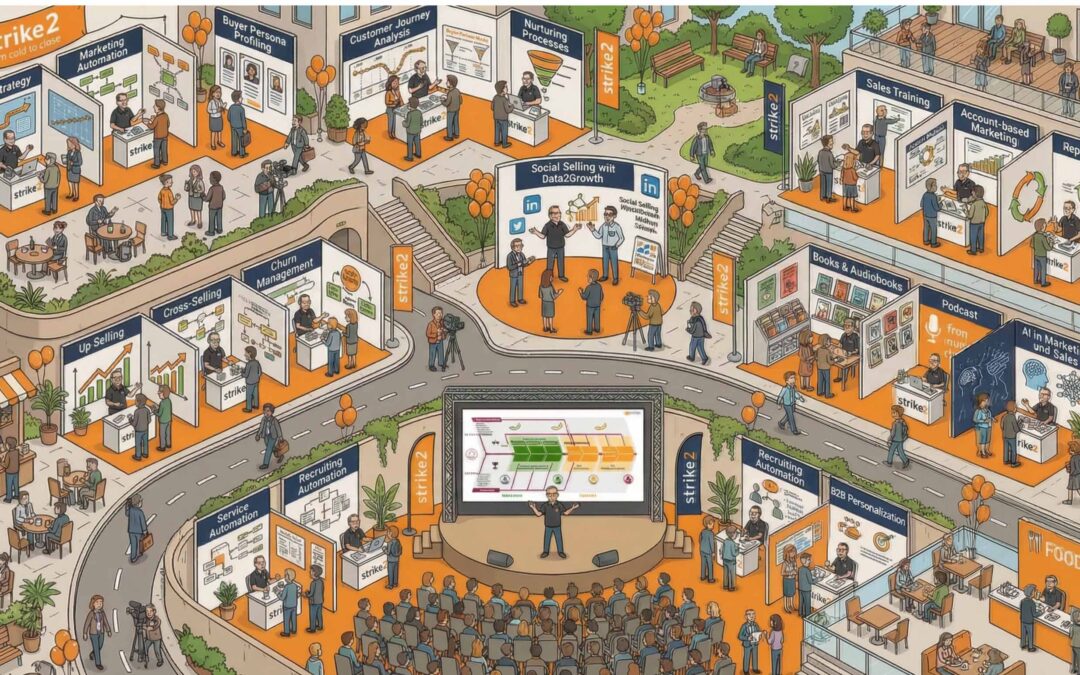
Imagine standing on a hill overlooking a huge, bustling city. Everywhere you look, there is hustle and bustle. On a large stage, a speaker addresses a huge crowd. The streets are teeming with people rushing from one place to another. There are countless stalls where intense discussions are taking place, shops where people are trading, and screens glowing with complex diagrams everywhere. In between, you keep seeing strange robots busily driving around, apparently performing important tasks.
This image of a vibrant metropolis is the perfect metaphor for modern digitalization in marketing and sales. It is a complex, interconnected ecosystem with countless disciplines, goals, and technologies. Can all of this be represented in a single image? Yes, it can. And this image shows more than just chaos—it shows a system with a clear philosophy: From cold to close.
The big picture: More than just a jumble of measures
Digitalization in the B2B environment is not a simple plug-and-play process. A haphazard series of digital measures rarely leads to success. It is like arbitrarily building roads in our metropolitan metaphor without knowing where they should lead. The result is chaos, traffic jams, and frustration.
The key to success lies in understanding the big picture and developing a well-thought-out digital strategy. This strategy is the city map for your metropolis. It defines your goals and how the individual elements work together to achieve them. Is it about acquiring new customers? Do you want to leverage the potential of your existing customers through cross-selling, up-selling, or repeat selling? Or are you struggling with customer churn (churn management)?
Each of these destinations requires a different route on our city map, but they are all part of the same ecosystem. Let’s take a stroll through this vibrant city together and explore the most important neighborhoods and intersections.
The foundations of your city: strategy and understanding
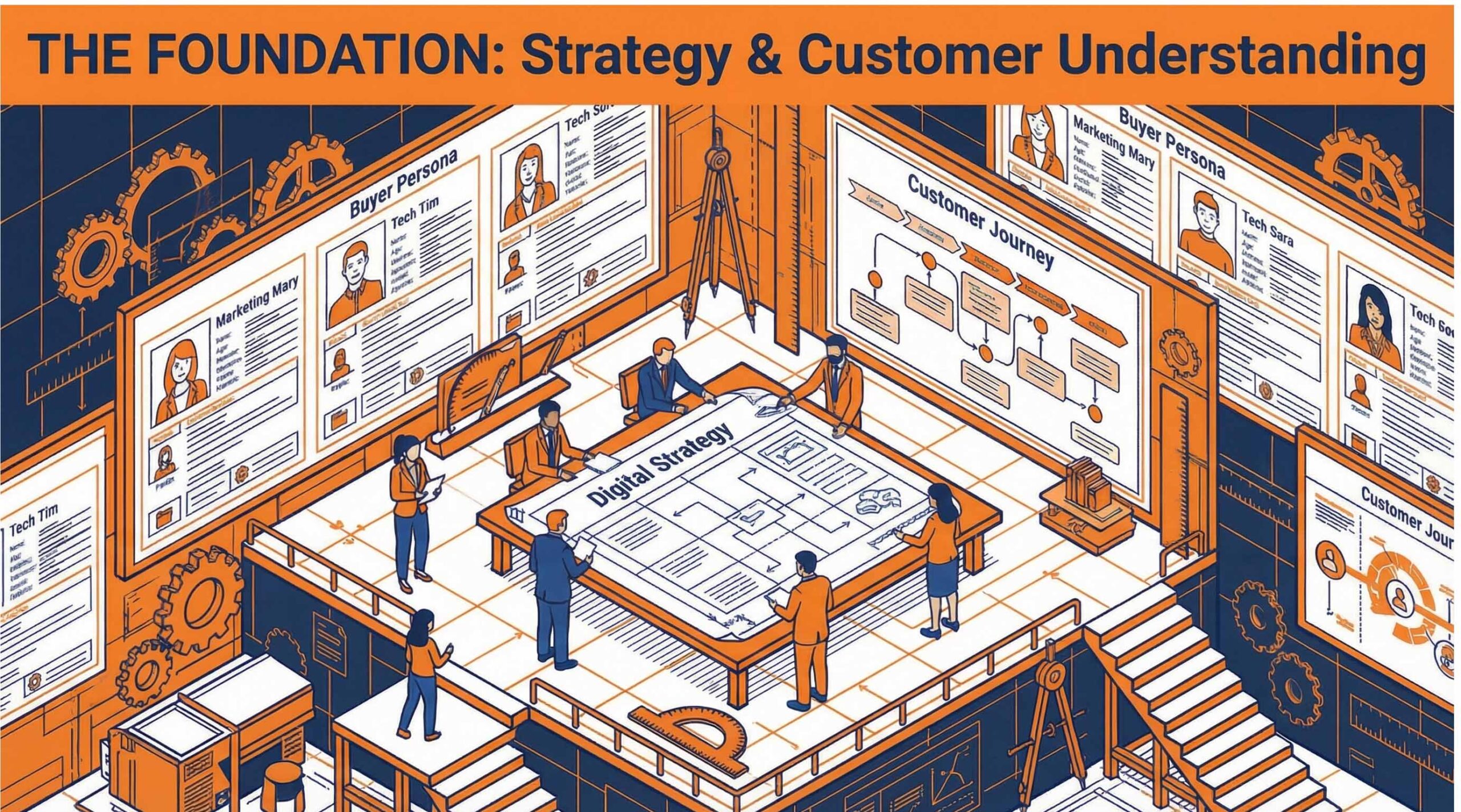
Before you start using even a single digital channel, you need to lay the foundations. Without them, you’re building on sand.
Digital strategy: The master plan
It all starts here. Your digital strategy is the development plan for your city. It defines your goals, your target groups, and the resources you need to achieve them. It answers the question of “why” before the “how” and “what” even become relevant. A good strategy ensures that marketing and sales are pulling in the same direction and not working in different directions.
Buyer persona profiling: Who are you addressing?
Your city is there for its residents. But who are these residents? Buyer persona profiling goes far beyond demographic data and simple profiles. It’s about understanding the motivations, challenges, pain points, and information needs of your ideal customers in detail. Only when you know who your ideal customers are and what really moves them can you create relevant content and messages that will reach them.
Customer journey analysis: The paths your customers take
The customer journey is like the road network in your city. It describes the entire process that a potential customer goes through, from their first awareness of your company to the purchase and beyond. Analyzing this journey shows you at which touchpoints your customers interact with you, what questions, pain points, and goals they have at each stage, and where there may be obstacles. This analysis is the basis for a seamless and positive customer experience.
The beating heart: marketing automation and lead management
At the center of our city lies the beating heart that keeps everything running: a system of automated processes that ensures that the right information reaches the right people at the right time.
Marketing Automation: The engine of your city
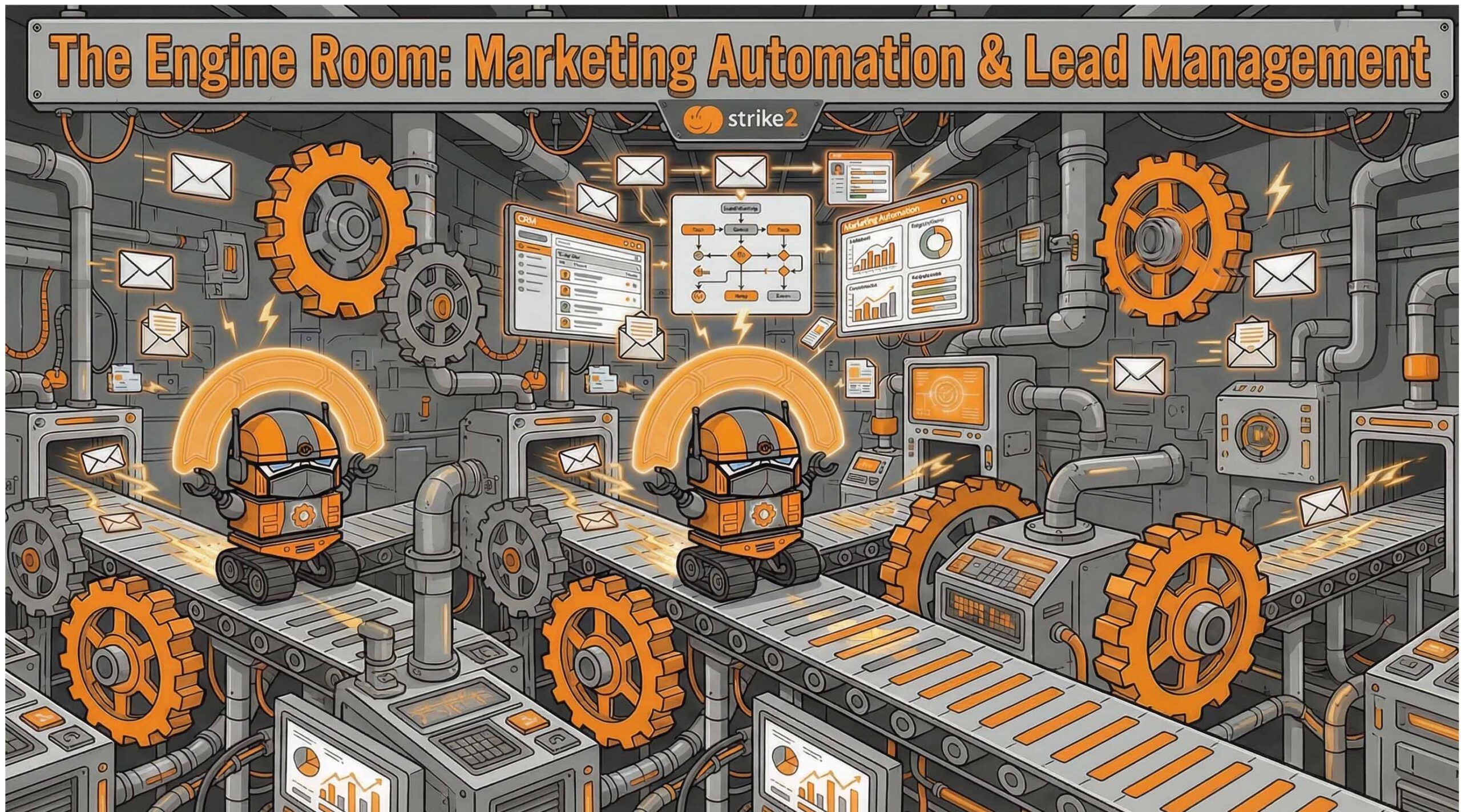
Marketing automation is much more than just automated email delivery. It is the engine that drives your entire marketing and sales machine. A marketing automation platform enables you to manage personalized and scalable campaigns across multiple channels, track the behavior of your contacts, and trigger automated actions based on that behavior. It is the central nervous system of your digital activities.
CRM: The central nervous system of your city
If marketing automation is the engine, then the CRM system is the central nervous system of your digital city. It is the control center where all information about your contacts, leads, and customers converges. Every interaction, every touchpoint, every email opening is documented here and available to the entire team.
A modern CRM is much more than a digital address database. It is the basis for a 360-degree view of the customer, enables accurate forecasting, controls sales processes, and provides the data that brings marketing automation and AI to life. Without a well-maintained CRM, nothing works—it is the foundation on which all other systems are built.
Nurturing processes: Accompanying you on your journey
Not every prospect is ready to buy immediately. Nurturing processes are like a friendly city guide who accompanies your potential customers on their journey. By providing relevant and helpful content (content marketing), leads are gradually qualified and developed until they are ready for a conversation with sales. This process builds trust and positions you as an expert.
Lead Management: Traffic Control
Lead management is the intelligent traffic control system for your city. It encompasses the entire process from generating a lead to qualifying it (lead scoring) and handing it over to sales (lead routing). Good lead management ensures that sales only receives high-quality leads that are ready for sales, which dramatically increases efficiency and closing rates.
The bustling marketplaces: Active customer acquisition
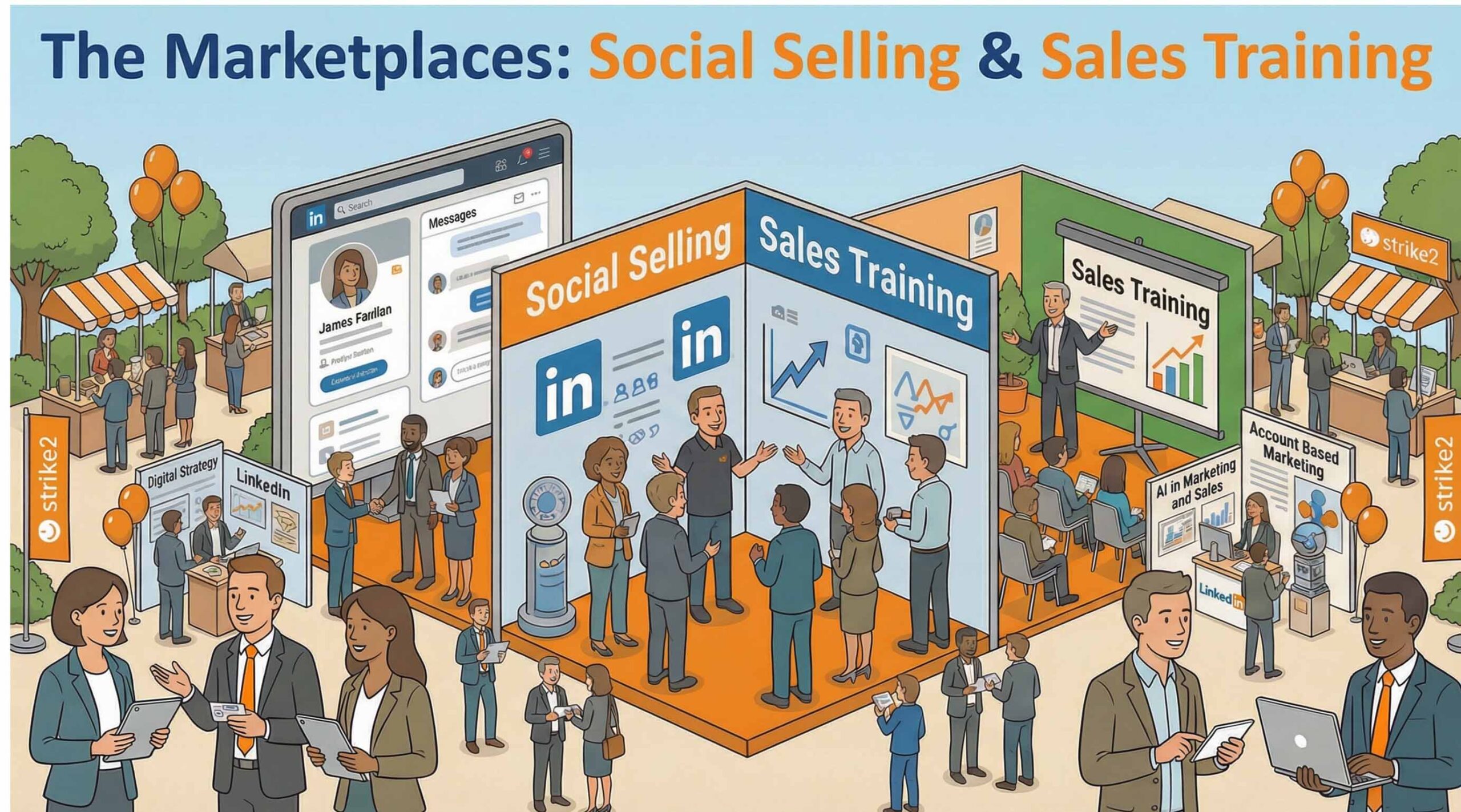
In addition to automated processes, there are lively marketplaces where active trading and interaction take place.
Social selling with Data2Growth: Networking in the digital age
Social selling with Data2Growth: Networking in the digital age
Sales training: Equipping dealers for success
Even the best digital strategy is useless if the sales team is unable to capitalize on the opportunities it generates. Modern sales training equips your sales staff with the skills they need to succeed in the digital age. This includes working with new technologies, the ability to conduct value-adding conversations, and truly understanding customer needs.
The treasure troves: The potential of your existing customers
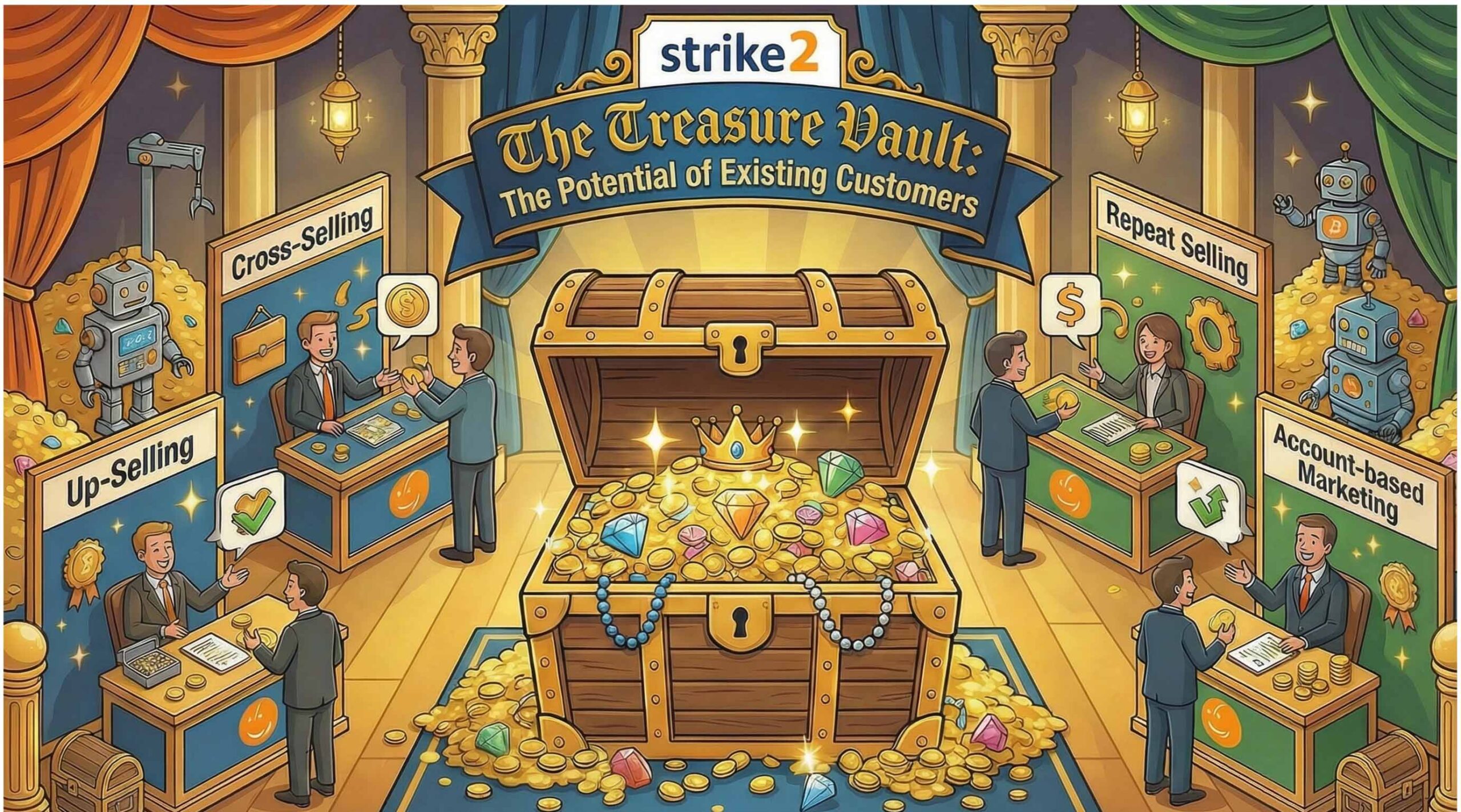
Often, the greatest treasure is not far away, but right on your doorstep. Your existing customers are the most valuable residents of your city.
Account-based marketing (ABM): VIP treatment for key customers
With account-based marketing, you turn the tables: instead of casting a wide net, you focus your marketing and sales activities on a select list of high-value target customers (accounts). Each of these accounts is treated as its own market and addressed with tailored campaigns and content. This is the ultimate form of personalization.
Repeat selling, upselling, and cross-selling: Getting more value from existing relationships
It is much easier and cheaper to sell to an existing customer again than to acquire a new one. Repeat selling, upselling (selling a higher-value variant), and cross-selling (selling complementary products or services) are the key disciplines in existing customer management. They not only increase sales but also customer loyalty.
Churn management: Preventing residents from moving away
Customer churn is like a leak in the foundation of your city. Proactive churn management analyzes the reasons for customer churn and takes targeted measures to identify at-risk customers and retain them through improved support and relevant offers.
The future is now: AI and automation
Everywhere in our city, we see small and large robots busily driving around. They are the strike2FORMERS, symbols of the next stage of digitalization.
AI in marketing and sales: The intelligent helpers
Artificial intelligence (AI) is no longer a thing of the future. In marketing and sales, it helps to identify patterns in large amounts of data, make predictions about customer behavior (predictive analytics), personalize content, and automate processes even more intelligently. It is the smart assistant that helps you make better decisions and generate relevant content.
Service Automation & Recruiting Automation: Efficiency beyond sales
The principles of automation can also be applied to other areas. Service automation can help process customer inquiries faster and more efficiently, while recruiting automation optimizes the employee recruitment process—from the candidate journey to onboarding.
Personalization in B2B: Every resident is unique
The supreme discipline and the goal of all efforts. True personalization means giving each individual customer the feeling that they are understood and that your offers are tailored precisely to their needs. This is only possible through the intelligent interaction of all the disciplines mentioned so far.
The ecosystem of knowledge: books and podcasts
Our city also has libraries and radio stations—places of knowledge and exchange. My books and podcast are exactly that. They are not advertising tools, but valuable resources that share my knowledge and build trust.
Conclusion: From chaos to clarity—with the right city map
Our journey through the metropolis of digitalization in marketing and sales shows that it is a complex but manageable system. The picture may seem overwhelming at first glance, but with the right strategy—your personal city map—the chaos becomes an orderly, highly efficient ecosystem that reliably guides you from “cold to close.”
However, the most important aspect of all this technology and automation must never be forgotten, and it is at the heart of my philosophy: the goal—especially in B2B—of all these efforts is to generate more and better high-level human-to-human contact. Technology is just a tool to give sales teams the freedom to focus on what they do best: building valuable relationships with other people.
If you recognize yourself in this picture and feel that there are still some roads in your city that lead nowhere, or that important neighborhoods are still completely undeveloped, then let’s talk. I’m curious to see what your city looks like and where you want to go. Maybe together we can design the perfect city map for your success.
What is the biggest construction site in your digital metropolis? I look forward to hearing from you!